EFOS Career in Germany Series | Article 5 of 20
For many Indian students and young professionals, building an international career is an important ambition. Some want to gain technical skills, others want to pursue higher education, and many are looking for opportunities to develop their careers beyond their home country.
Germany is one destination worth exploring. Known for its industrial base, vocational training system, universities, and skilled-professional career pathways, Germany offers several routes that may suit Indian candidates with different educational backgrounds.
However, moving abroad is a major decision. Salary, qualifications, language requirements, living costs, and immigration rules all matter.
This article explains why Germany may be a good career destination for Indians, what opportunities are worth investigating, and what you should consider before making the move.
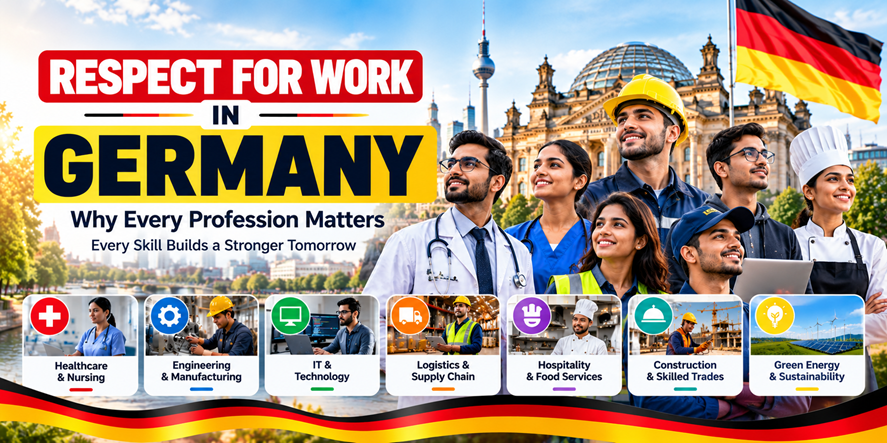
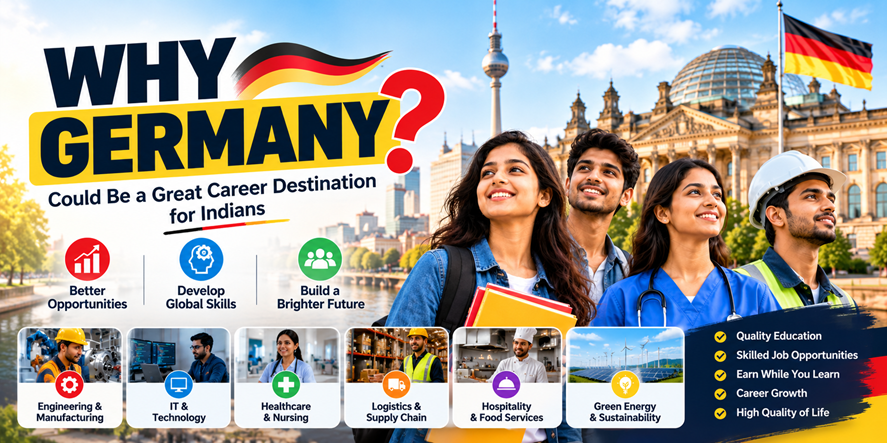
Germany is internationally recognised for engineering and manufacturing, but its economy extends far beyond these sectors.
Indian candidates can explore career pathways in:
Engineering and advanced manufacturing
Information technology and digital services
Healthcare and nursing
Logistics and supply chain management
Construction and skilled trades
Hospitality and food services
Renewable energy and environmental technology
Business operations and selected professional services
The best opportunities depend on the occupation, region, employer, and your qualifications. Some fields face persistent recruitment challenges, while others can be highly competitive.
The lesson for Indian job seekers: Choose an industry that matches your skills instead of assuming every sector offers easy entry.
One reason Germany deserves consideration is the variety of education and employment pathways available.
Higher education
Study for a bachelor's or master's degree, develop specialised knowledge, and explore internships or suitable employment opportunities.
Ausbildung (vocational training)
Eligible candidates can undertake structured occupational training. Company-based dual programmes generally combine practical workplace learning with vocational school and provide a training allowance.
Direct employment
Qualified candidates with relevant skills and experience can explore suitable job offers and the applicable skilled-worker immigration routes.
These pathways have different entry requirements. Your school qualification, degree, professional experience, language proficiency, and financial circumstances will influence which route is appropriate.
Germany has a well-established vocational education system that prepares people for specific occupations. Technical skills, occupational qualifications, practical experience, and professional competence can all play an important role in career development.
For Indian candidates, this is worth understanding because career success does not always depend on having the highest academic degree.
Examples include:
A mechatronics technician maintaining industrial equipment.
An electrician working with electrical systems.
A logistics specialist coordinating warehouse operations.
A qualified healthcare professional providing patient care.
A software developer building digital solutions.
Each occupation has its own requirements, and regulated professions may require formal recognition or licensing.
The broader lesson is that practical skills, professional responsibility, and continuous learning can be valuable alongside academic qualifications.
For young Indians who prefer hands-on training, Ausbildung can be an alternative to a traditional university pathway.
In company-based dual vocational training, trainees generally receive an allowance while learning a profession. They also gain structured workplace experience and attend vocational school.
This can be attractive for candidates who want to connect education with practical occupational skills.
However, Ausbildung is not a guaranteed job-placement scheme. Applicants must secure a suitable training position, meet the relevant language and educational requirements, and satisfy the applicable visa conditions.
Before applying, investigate the training occupation, contract, allowance, duration, and living expenses.
Building a career abroad can expose you to different technologies, working practices, and professional environments.
Depending on your role, studying or working in Germany may help you develop:
Technical and occupational skills
Cross-cultural communication
Independent problem-solving
Experience working in international teams
Professional discipline and accountability
Familiarity with different business practices
These capabilities can support your professional development in Germany and potentially elsewhere.
Nevertheless, international experience alone does not guarantee career advancement. The value you gain depends on the quality of your education or employment, your performance, and how effectively you develop your skills.
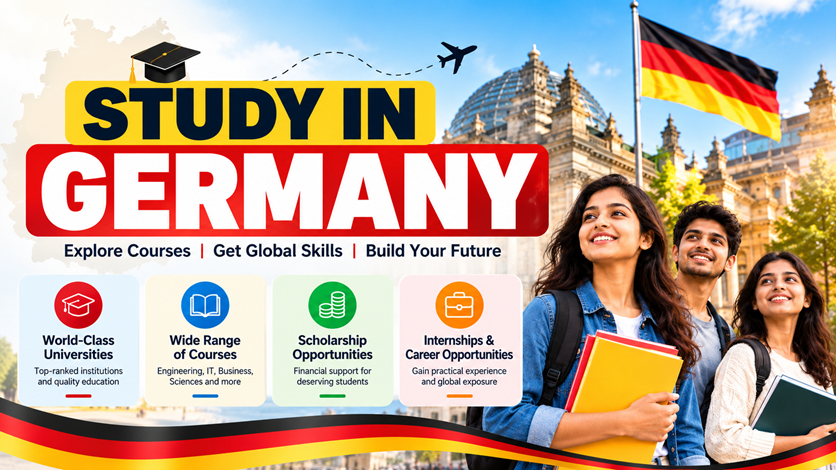
Germany offers a wide range of higher education programmes, including bachelor's degrees, master's degrees, and specialised courses.
Many public universities charge no tuition for numerous programmes, although semester contributions apply and exceptions exist. Some institutions and states charge tuition to international students, while private universities generally have their own fee structures.
Indian students should evaluate the full cost of studying, including:
Tuition fees, if applicable
Accommodation and food
Health insurance
Transport and study materials
Travel and visa expenses
Initial settlement costs
Explore official information through the German Academic Exchange Service (DAAD) before deciding on a university.
Remember: Low tuition does not mean zero living expenses. Your financial plan should cover the entire study period.
Germany may provide opportunities to develop from an entry-level position into a more specialised or senior role.
For example:
Starting point | Possible future direction |
|---|---|
Vocational trainee | Qualified professional, specialist or experienced technician |
Junior software developer | Software engineer, technical specialist or team lead |
Production technician | Maintenance, quality assurance or production specialist |
Logistics employee | Operations coordination or supply chain management |
University graduate | Specialist, analyst, researcher or professional role |
These are illustrative career paths rather than guaranteed promotions.
Progression depends on experience, performance, additional qualifications, language skills, employer needs, and the labour market.
Eligible international graduates and qualified workers may also have routes to longer-term residence, subject to the relevant legal requirements.
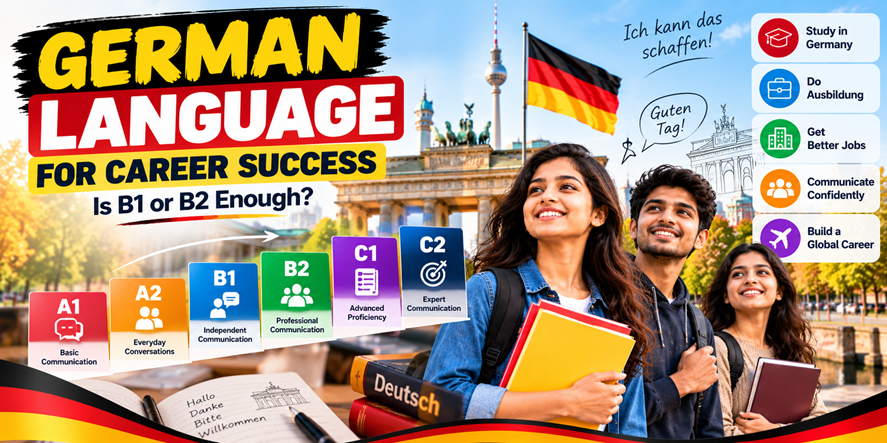
Language preparation is an important part of planning your career in Germany.
Some international companies offer English-speaking roles, especially in certain technical and research environments. However, German is important for many workplaces and everyday activities.
Learning German can help you:
Communicate with colleagues and supervisors.
Understand workplace instructions.
Participate in vocational training.
Interact with customers or patients where relevant.
Manage accommodation, appointments, and daily life.
Explore a broader range of career opportunities.
Your required proficiency level depends on your occupation, employer, programme, and visa pathway.
Starting early is generally a sensible investment, even if you initially plan to apply for English-speaking positions.
Living in Germany can offer an opportunity to experience a different culture and develop independence.
Depending on where you live, you may benefit from public transport, cultural activities, access to nature, and opportunities to interact with people from different backgrounds.
However, your experience will depend on your city, income, accommodation, work schedule, and personal circumstances.
Before relocating, consider:
Housing availability and rent
Monthly living expenses
Climate and seasonal changes
Distance from family
Cultural and language adaptation
Health insurance and access to services
Your support network
A successful move requires preparation for everyday life, not just a plan for finding a job.
Germany may be worth considering if you are willing to prepare for its educational, occupational, and language requirements.
Your starting point will depend on your background.
If you have completed Class 12
Explore eligible university programmes and vocational training opportunities. Check admission requirements, language levels, and finances.
If you have an ITI or diploma
Research occupations aligned with your technical background, suitable Ausbildung programmes, and jobs that match your qualifications.
If you have a degree
Consider relevant postgraduate programmes, research opportunities, or employment that matches your academic specialisation.
If you have professional experience
Identify relevant vacancies, compare your qualifications with employer requirements, and investigate the appropriate skilled-worker pathway.
11. What challenges should Indians consider
A balanced career decision must include potential difficulties as well as advantages.
Language barriers: German may be essential for your selected occupation and daily life.
Competition: Popular positions can attract many applicants, and not all employers recruit candidates from abroad.
Living costs: Rent, insurance, transport, and other expenses can reduce the amount of money available after deductions.
Qualification recognition: Some qualifications may need formal recognition or additional training.
Cultural adjustment: Professional communication, workplace expectations, and everyday social practices may differ from those in India.
Immigration requirements: A job offer, university admission, or training opportunity does not automatically guarantee a visa or residence permit.
Understanding these challenges before applying helps you plan realistically and avoid costly mistakes.
1. Is Germany a good career destination for Indians?
It can be a suitable option for candidates whose qualifications, skills, career goals, and financial plans align with the opportunities available. It is not the right choice for everyone.
2. Can I move to Germany after Class 12?
Potentially, through eligible higher education or vocational training pathways. Admission and visa requirements vary by route.
3. Is German mandatory to work in Germany?
Not for every position, but German is important for many occupations. Some regulated professions and training programmes have specific language requirements.
4. Can I earn while learning in Germany?
Company-based dual Ausbildung generally includes a training allowance. University students may also be permitted to work under the applicable rules, but earnings should not be assumed to cover all expenses.
5. Can I settle permanently in Germany?
Some residence pathways can lead to eligibility for permanent residence, but the conditions vary. Education or employment in Germany does not automatically confer permanent residence.
6. Is Germany better than India for career growth?
There is no universal answer. Compare the specific role, salary after deductions, living expenses, career progression, family circumstances, and personal goals in both countries.
Germany can be an interesting destination for Indian students and professionals seeking international education, vocational training, or skilled employment.
Its diverse industries and structured training pathways offer options worth researching. But the best results come from selecting the right occupation, building relevant skills, learning the language, verifying opportunities, and understanding the financial and immigration requirements.
Do not choose Germany only because it is abroad. Choose it because the pathway fits your career goals.
EFOS – Education Future One Stop
Explore education, vocational training, and career pathways that may match your background and ambitions.
Contact: +91 9403890820
Website: www.efos.in
Next article: Article 6 — Respect for Work in Germany: Why Every Profession Matters.